+31%
Increase in direct-booking qualified chat leads.
How a representative multi-property hospitality team deployed Hybrid AI chat to improve direct booking conversations and reduce front-desk pressure.
Disclosure: This is a composite UK case study based on anonymised deployment patterns from hospitality projects. Metrics are representative of realistic outcomes and shared for planning and benchmarking.
6 properties across South West England with a mixed direct and OTA booking model.
The group's websites were collectively receiving healthy organic traffic - particularly from guests researching boutique stays in the South West - but the conversion rate from visitor to direct enquiry was well below potential. A significant proportion of prospective guests were landing on property pages, checking availability, and then booking via an OTA rather than contacting the hotel directly. The group was paying commission on bookings it could have owned, simply because there was no immediate engagement mechanism on the website to capture interest and guide visitors towards a direct booking conversation.
Staff workload was a secondary but equally pressing concern. During peak occupancy periods - summer weekends, bank holidays, and the Christmas season - front desk teams were fielding the same handful of questions dozens of times per day: breakfast times, car parking, early check-in costs, pet policies, local restaurant recommendations. These interactions consumed valuable staff time that could have been spent on high-value guest interactions, upsell conversations, and complaint resolution. The goal was not to replace the human touch that defines boutique hospitality, but to give staff back the time to deliver it where it mattered most.
Measured against the previous quarter baseline.
Increase in direct-booking qualified chat leads.
Reduction in repetitive front-desk enquiry handling.
Faster first response time for after-hours web visitors.
Guest satisfaction score on resolved digital concierge chats.
The AI layer handles guest enquiries around the clock - freeing staff to focus on the conversations that define great hospitality.
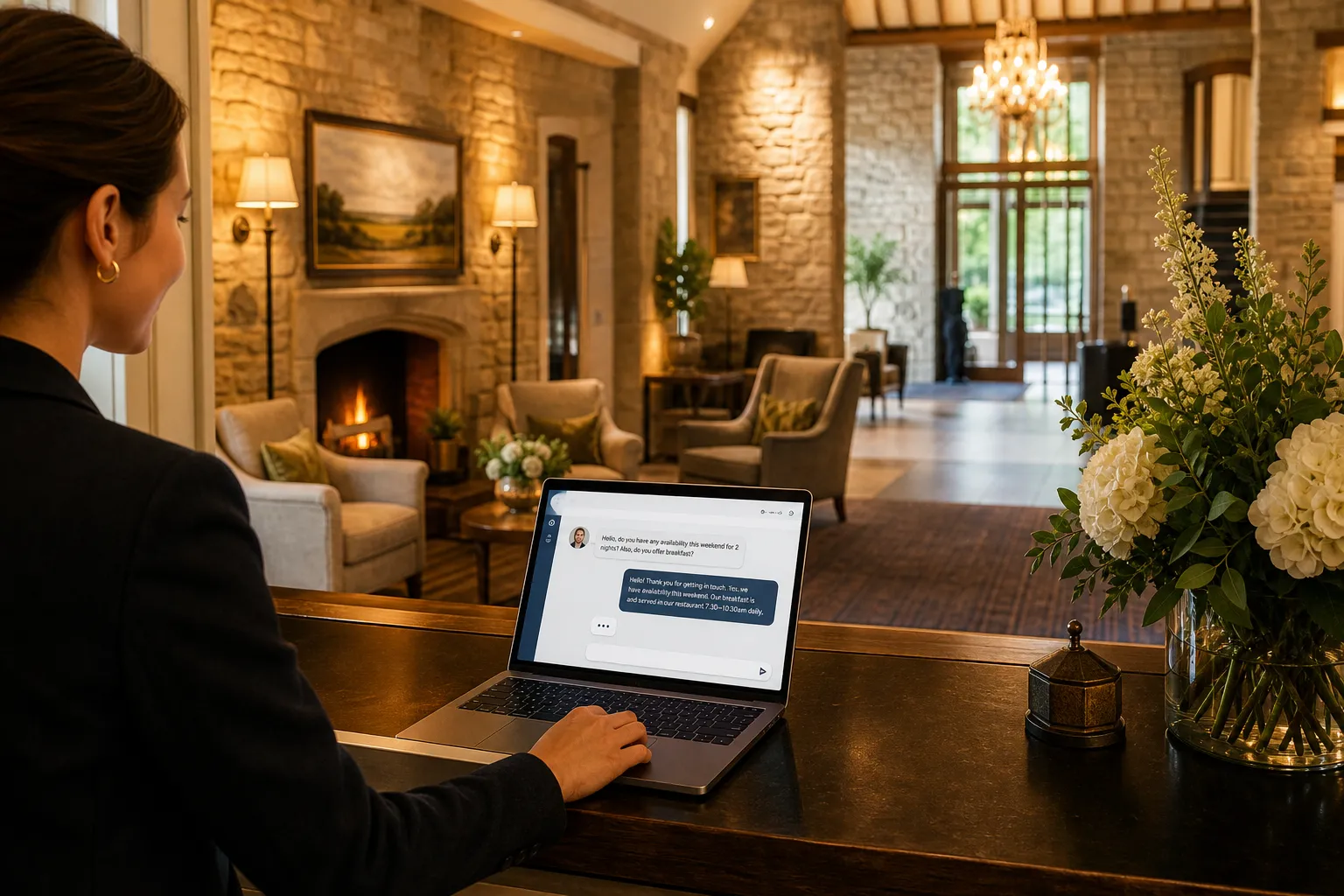
The RAG knowledge base was loaded with each property's policy documents, amenity guides, parking information, breakfast menus, pet policies, and check-in instructions. The AI answers these questions instantly and accurately in the hotel's own voice - 24 hours a day, 7 days a week - without a single front-desk interruption.
When a visitor's behaviour signals booking intent - browsing room pages, asking about availability, or mentioning specific dates - the AI workflow transitions into a structured booking conversation. It captures party size, date preferences, and special requirements, then hands off a warm, qualified lead to the reservations team rather than letting the visitor drift to an OTA.
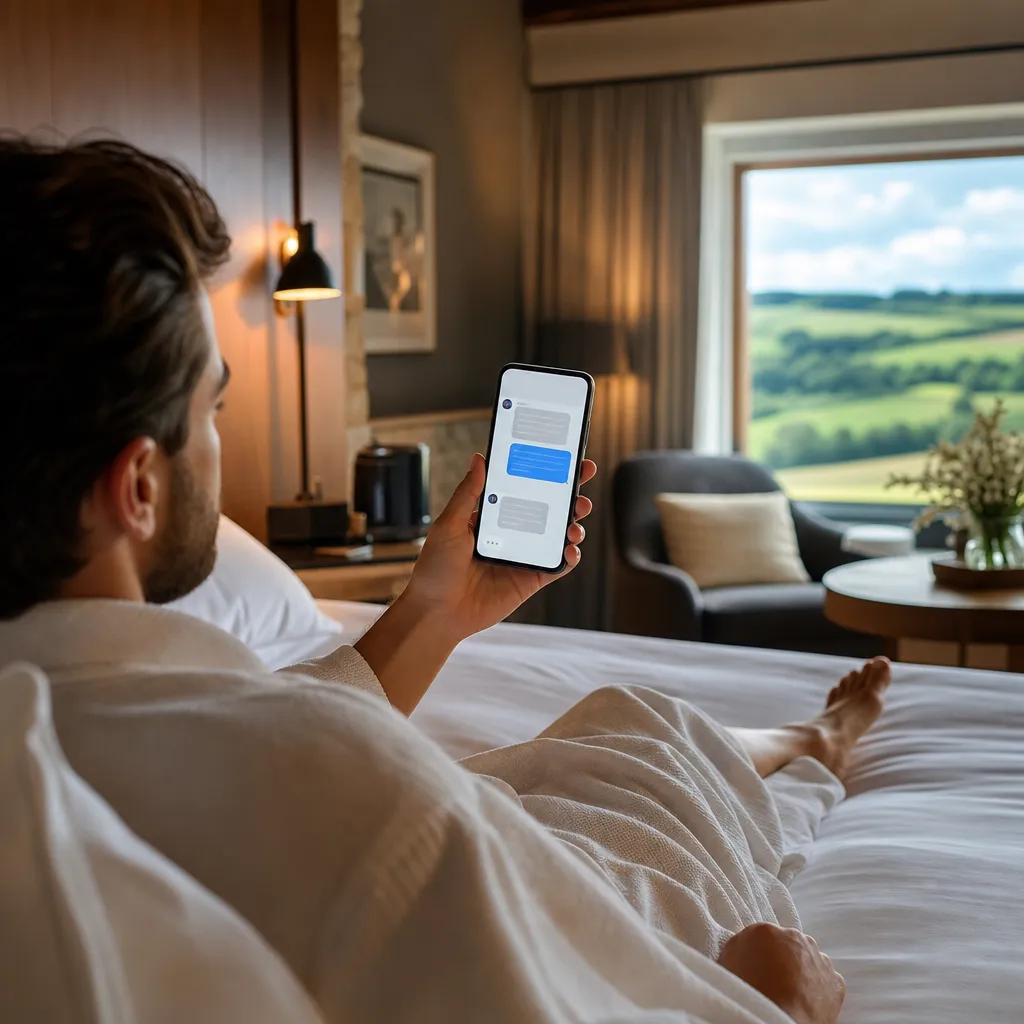
Guests arriving via mobile during the stay could chat to request restaurant recommendations, local attractions, taxi bookings, and early luggage storage. The AI drew from a curated local guide uploaded to the knowledge base, providing consistent, accurate recommendations that previously required a member of staff to recite from memory.
Complaint signals, dissatisfaction keywords, and high-value enquiry types trigger immediate escalation to a human agent. The AI never attempts to manage a complaint on its own - it acknowledges the guest, reassures them, and connects them to a trained team member with the full conversation context already in view.
Phased rollout to protect service quality during peak periods.
The decision to phase the rollout around the group's peak calendar was deliberate. Weeks 1-4 fell in the shoulder season, giving the team time to refine tone and accuracy without risk to high-occupancy reputation. By the time the summer peak arrived in weeks 5-12, the system was processing the majority of repetitive enquiries automatically - at exactly the time when staff workload pressure was highest and front-desk interruptions were most costly.
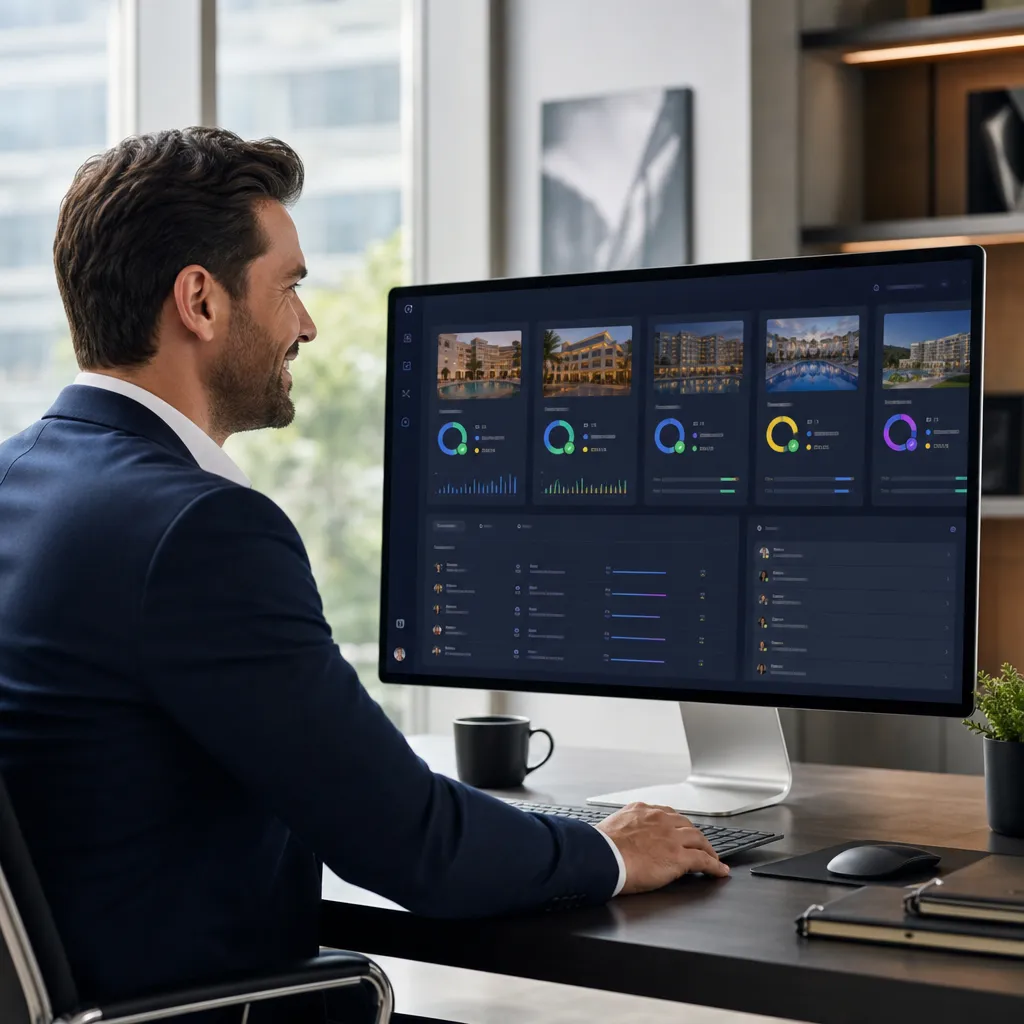
A single operations view across all properties - with the flexibility for each location to maintain its own voice and content.
One of the most significant operational advantages for the hotel group was the ability to manage all six properties from a single IMSupporting dashboard, while still giving each property's team access only to their own guest conversations. The group operations manager could view cross-property analytics - satisfaction scores, enquiry volume, response times, and conversion rates - at a glance, while individual property managers worked within their own chat queue and workflow configuration.
Each property's team sees only its own guest conversations. No cross-property data leakage.
Group-wide policies sit alongside property-specific amenity guides in the same knowledge base.
The reporting platform aggregates satisfaction scores and enquiry volumes across all properties.
Central reservations staff can handle escalated chats from any property when individual teams are unavailable.
Built for the realities of hospitality - seasonal demand, multi-property operations, and guests who expect an immediate, personal response.
A large share of leisure travel research happens in the evening and at weekends - precisely when hotel reservation desks are closed. IMSupporting captures booking intent around the clock, routing structured enquiries to the reservations team at the start of the next working day rather than letting those visitors book via an OTA instead.
Answer quality no longer depends on which team member happens to pick up an enquiry. The AI delivers the same accurate, on-brand response to every guest about parking, breakfast, or pet policy - regardless of the time of day, the property, or the shift pattern.
Workflow logic allows the AI to surface relevant upgrades and packages at natural conversation moments. A guest asking about room types can be shown a spa break package. A visitor enquiring about a special occasion stay can be offered a champagne and flowers upgrade - consistently, at scale, with no staff intervention required.
Each property has its own RAG knowledge base populated with its own menus, local guides, facilities, and policies. When guests ask property-specific questions, they get property-specific answers - not generic responses that erode trust in the information.
Complaints, VIP enquiries, accessibility requirements, and group booking negotiations are automatically escalated to a human agent. The handoff includes full conversation context so the team member can pick up without asking the guest to repeat themselves - preserving the personal touch that boutique hospitality demands.
A post-stay workflow triggers automatically at checkout to capture guest satisfaction scores and optional comments. This creates a steady stream of structured feedback that flows directly into the analytics dashboard - giving management the data to identify service patterns and reward high-performing teams.
Planning guidance for hospitality teams considering rollout.
Most teams launch an initial live version in 2-4 weeks and then optimise workflows over the next 60-90 days. For multi-property groups, a phased approach is recommended - starting with one or two properties to establish tone and accuracy before expanding. Free integration assistance is available to accelerate the process.
No. IMSupporting operates alongside your existing PMS and booking engine. The chat widget captures enquiry and booking intent, with qualified leads handed off to your reservations team or connected via API to your booking system. There is no need to change your existing technology stack.
Yes. The platform is designed for multi-property hospitality groups. Each property gets its own widget, knowledge base, and operator queue, while a central account gives management a group-level view of performance. Shared policies can sit alongside property-specific content so guests always get accurate, location-relevant answers.
Complaint signals and dissatisfaction keywords trigger immediate escalation to a human team member. The AI does not attempt to resolve complaints independently - it acknowledges the guest, communicates genuine care, and connects them to the right person with the full chat context visible. This protects your brand and ensures sensitive situations are always handled by trained staff.
Yes. Each property uploads its own documents - menus, facility guides, local area recommendations, check-in instructions, pet and accessibility policies - to its dedicated RAG knowledge base. The AI draws exclusively from your uploaded content to answer questions, meaning answers are always accurate and aligned with your current offering rather than generic or invented.
Yes, indirectly. By engaging booking-intent visitors in a direct conversation before they navigate away to an OTA, the chat widget creates more opportunities to convert those visitors into direct enquiries and bookings. Capturing guest details, preferences, and dates in a structured chat means your reservations team can follow up quickly with a personalised offer - something OTA platforms cannot replicate.
The post-stay workflow is a short automated chat sequence triggered at checkout. It asks guests to rate their stay, captures an optional comment, and thanks them for visiting. Scores and comments flow directly into the analytics dashboard, giving management real-time visibility of satisfaction trends across all properties. High-scoring stays can trigger an automated review invitation prompt to support your TripAdvisor and Google review strategy.
We can map a phased deployment approach for your team and occupancy profile.